
Think only big companies get hacked?
Wrong. Small gaps are all an attacker needs.
A cybersecurity vulnerability assessment is the practical way to find and fix those gaps before someone else does.
This post shows what an assessment looks like, how to run scans and manual checks, how to prioritize findings, and how to turn fixes into a repeatable program.
Read on to learn what to scan, which tools help, and the exact steps your team should take next.
Core Explanation of Vulnerability Assessments

A vulnerability assessment is how you systematically find, evaluate, and document security weaknesses across your tech infrastructure. It’s a mix of automated scanning and manual checks that uncover things like misconfigurations, outdated software, missing patches, weak passwords, and other flaws hackers could use. This happens across networks, apps, databases, and endpoints. Different from penetration testing (which tries to actually exploit vulnerabilities to prove damage), vulnerability assessments focus on discovery and sizing up risk. You get a comprehensive map of potential entry points attackers might use.
Organizations run these assessments to see their security gaps before bad actors do. The process turns unknown risks into measurable, prioritized tasks. Your security and IT teams can then put resources where they’re needed most. Regular assessments catch weaknesses from new deployments, config changes, or freshly disclosed CVEs. You prevent the buildup of technical debt that keeps expanding your attack surface.
A good vulnerability assessment gives you a prioritized list of weaknesses, risk scores tied to business impact, and clear remediation steps. These outputs feed directly into patch cycles, config hardening projects, and executive dashboards. It creates a feedback loop that keeps strengthening your defenses.
Main benefits:
- Risk visibility – You see all exploitable weaknesses across every asset type
- Prioritization – Risk-based ranking so you tackle critical exposures first
- Compliance readiness – Audit evidence for PCI DSS, HIPAA, SOC 2, ISO standards
- Remediation efficiency – Clear findings with context cut down time to fix
Common Vulnerability Assessment Methodologies

Network-based assessments scan IP ranges, subnets, and internet-facing perimeters. They identify exposed services, open ports, outdated protocols, and known vulnerabilities in network gear like routers, firewalls, and switches. This uses both unauthenticated scans (simulating what an outside attacker sees) and authenticated scans that log into devices to check patch levels and settings. Most organizations run network assessments quarterly for compliance, continuously for high-risk perimeters.
Host-based assessments look at individual servers, workstations, and virtual machines. They install agents or use credentialed scans to inspect OS patches, installed software versions, local user permissions, and security settings. This catches things network scans miss. Privilege escalation risks, insecure local configs, compliance drift on endpoints. Host-based methods matter inside segmented environments where network scanners can’t reach.
Wireless assessments focus on Wi-Fi infrastructure. Testing for weak encryption (WEP, old WPA), rogue access points, misconfigured authentication (like open guest networks accessing internal resources), and vulnerabilities in wireless controllers. Security teams do these on-site or using distributed sensors to map the RF environment and verify isolation between guest and corporate VLANs.
Application-focused assessments target web apps, APIs, and mobile apps. Looking for injection flaws, broken authentication, insecure deserialization, and other logic errors from frameworks like the OWASP Top 10. Automated scanners crawl applications and fuzz inputs. Manual testing validates business logic and complex workflows automation often misses. You’d schedule these after major releases and continuously in DevOps pipelines.
Tools Used in Vulnerability Assessments

Vulnerability assessment tools break into two categories: automated scanners that quickly identify known issues across large environments, and manual techniques that verify findings and uncover logic flaws automation can’t detect. Automated tools query CVE databases, misconfigurations, and security benchmarks to flag risks at scale. Manual verification cuts down false positives and prioritizes findings based on real exploitability and business context.
Scanner types you’ll see:
- Network scanners – Probe IP ranges for open ports, service versions, CVE matches (Nessus, Qualys, OpenVAS)
- Application scanners – Crawl web apps and APIs for injection, XSS, authentication flaws (Burp Suite, OWASP ZAP)
- Configuration analyzers – Compare system settings against CIS benchmarks and compliance baselines (CIS-CAT, AWS Config)
- Dependency checkers – Scan code libraries and containers for vulnerable components (Snyk, Trivy, GitHub Dependabot)
- Credentialed vs uncredentialed – Credentialed scans authenticate to systems for deep inspection; uncredentialed scans simulate external attacker view
After automated scans finish, security analysts manually validate top-priority findings to confirm exploitability, eliminate false positives, and add business context. A scanner might flag a medium-severity CVE on a server. Manual review determines whether the vulnerable service is actually exposed or mitigated by network segmentation. This validation ensures remediation effort focuses on real risks, not noise.
Step‑by‑Step Vulnerability Assessment Process

1. Scoping and planning – Define which assets, networks, and apps fall within the assessment boundary. Classify assets by criticality. Set objectives like compliance validation or pre-audit readiness. Establish scanning windows to avoid disrupting production.
2. Asset identification and inventory – Use network discovery, CMDB queries, cloud inventory APIs, and endpoint management tools to build a complete list of in-scope devices. IP addresses, hostnames, OS types, ownership. An accurate inventory ensures no assets get missed and scan coverage can be measured.
3. Scanning and testing – Execute automated vulnerability scans using credentialed and uncredentialed methods across network, host, and application layers. Run configuration compliance checks. Perform manual spot-checks on critical systems. Scans should run during approved maintenance windows or in read-only modes that minimize service impact.
4. Analyzing and validating results – Review raw scan output to filter false positives, correlate findings across tools, and validate high-severity items through manual testing or proof-of-concept checks. Analysts compare findings against threat intelligence to identify vulnerabilities with known active exploits.
5. Prioritizing findings – Rank vulnerabilities using CVSS score, exploit availability, asset criticality, internet exposure, and potential business impact. A critical SQL injection on a customer-facing portal ranks higher than a medium-severity patch gap on an isolated test server. Apply remediation SLAs like seven days for critical issues, 30 days for high-severity findings.
6. Reporting and remediation recommendations – Produce technical remediation reports for IT and engineering teams with specific patch versions, configuration changes, or compensating controls. Generate executive dashboards showing total vulnerabilities by severity, trends over time, and compliance status. Include re-scan timelines to verify fixes.
After remediation, re-scanning confirms vulnerabilities have been closed and no new issues were introduced. This cyclical process (scan, prioritize, fix, verify) repeats on a regular cadence to catch newly disclosed CVEs, configuration drift, and changes from deployments. Continuous improvement gets embedded into the security program.
Best Practices for Effective Vulnerability Assessments
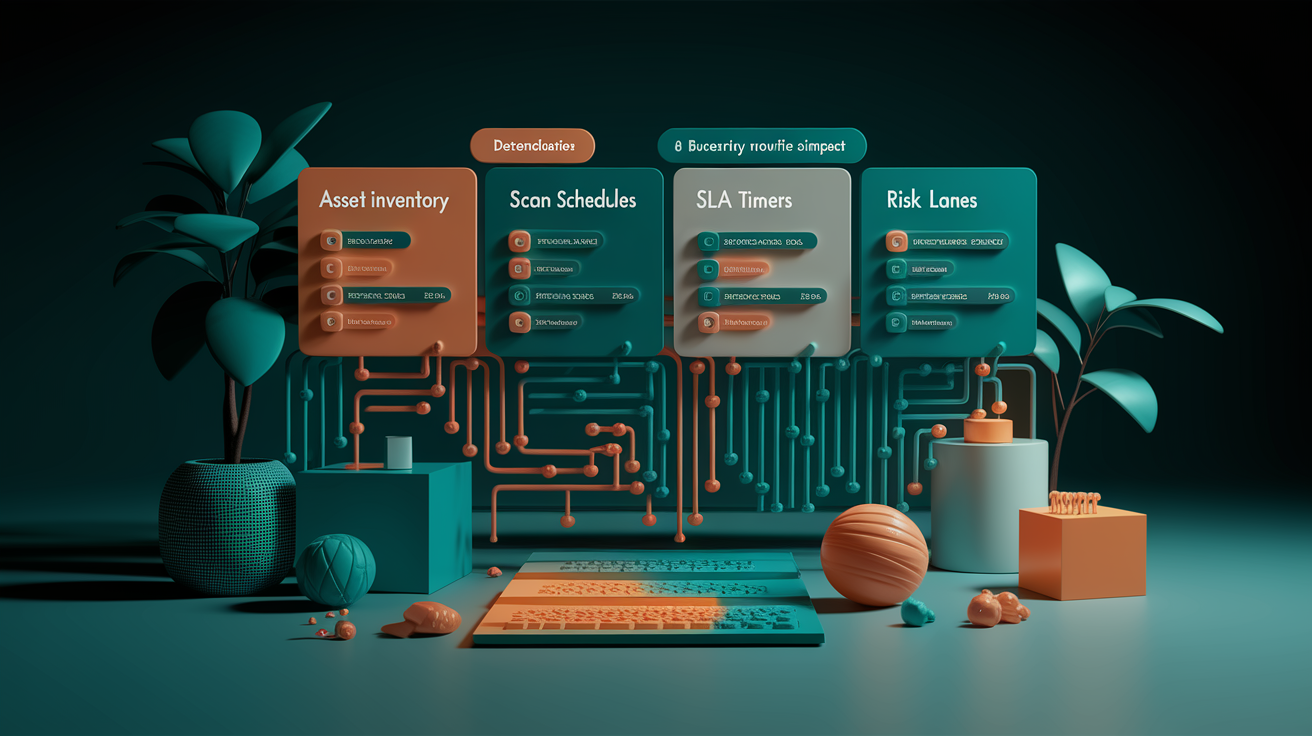
Preparation drives assessment quality. Maintain an up-to-date asset inventory that includes cloud resources, containers, and shadow IT discovered through network monitoring. Use both credentialed scans to inspect internal configurations and uncredentialed scans to see what external attackers see. Schedule assessments to align with change windows and patch cycles. Run scans weekly or monthly for high-risk assets, quarterly for lower-priority systems.
During execution, combine automated scanning with manual validation to eliminate false positives and surface complex issues automation misses. Authenticated scans uncover missing patches and configuration drift that unauthenticated scans can’t detect. Map vulnerabilities to business-critical processes to prioritize remediation based on real impact, not just raw CVSS scores. A medium-severity flaw on a payment gateway demands faster action than a high-severity issue on a decommissioned server.
After each assessment, integrate findings into existing workflows rather than treating them as isolated reports. Route remediation tasks into ticketing systems like Jira or ServiceNow with clear SLAs and ownership. Track metrics like mean time to remediate by severity, percentage of assets scanned, and reduction in critical vulnerabilities over time. Conduct retrospectives to refine scanning configurations, reduce noise, and improve cross-team coordination between security, IT, and application development.
Compliance and Regulatory Alignment

Many regulatory frameworks and industry standards mandate periodic vulnerability assessments as evidence of proactive risk management. PCI DSS requires quarterly external vulnerability scans by an Approved Scanning Vendor and internal scans at least quarterly and after significant changes. Findings must be remediated and rescanned to demonstrate compliance before audits. HIPAA’s Security Rule requires covered entities to conduct regular risk analyses that include vulnerability identification and documented remediation plans, though it doesn’t prescribe specific scan frequencies.
SOC 2 audits and ISO 27001 certifications expect organizations to demonstrate ongoing vulnerability management processes. Evidence of scheduled assessments, risk-based prioritization, remediation tracking, and management review. Vulnerability assessment reports serve as key artifacts during audits, showing controls are operating effectively and security risks are actively managed. Organizations align scan cadences, scoring thresholds, and remediation timelines with the specific requirements of their applicable frameworks. Assessment results populate control matrices and compliance dashboards that auditors review.
Implementing Vulnerability Assessments in an Organization

Operationalizing vulnerability assessments requires defined roles, consistent scheduling, and integration with existing IT and security processes. Assign clear ownership. Typically a security analyst or team manages scanning tools, while system administrators and developers handle remediation. Small organizations might start with a part-time security admin supported by managed scanning services. Enterprises often employ dedicated vulnerability management teams of three to ten engineers coordinating across SOC, IT operations, and application security groups.
Scheduling should balance thoroughness with operational impact. External internet-facing assets benefit from continuous or daily scans to catch newly exposed services. Internal networks can be scanned weekly or monthly depending on asset criticality. Web applications should be assessed after each major release and at least monthly for high-risk apps. Document these cadences in a scanning calendar and communicate maintenance windows to avoid surprise disruptions.
Integration with patch management and change control ensures findings translate into action. Route scan results into ticketing systems with severity-based SLAs, link vulnerabilities to CMDB records for asset context, and trigger automated patch deployments for low-risk fixes. Embed vulnerability checks into CI/CD pipelines so new code and infrastructure are tested before production deployment. Regular executive reporting maintains visibility and accountability for risk reduction.
| Component | Description |
|---|---|
| Roles | Security analyst owns scanning tools and triage; IT/DevOps handle remediation; executives review dashboards and approve risk exceptions |
| Scheduling | External scans continuous or daily; internal scans weekly to monthly; application scans post-release and monthly; ad-hoc scans after incidents or major changes |
| Integration | Scan results feed ticketing (Jira, ServiceNow), link to CMDB for asset context, trigger patch automation, and populate compliance/audit reports |
Final Words
In action, this post showed what a vulnerability assessment is, the main methodologies, and the tools and steps to run one.
We also covered best practices, compliance links, and how to fold assessments into regular workflows so findings become fixes.
Treat security as a cycle: scan, prioritize, patch. A simple cybersecurity vulnerability assessment done regularly will lower risk and make audits easier. Keep at it—small, steady checks pay off.
FAQ
Q: What is a vulnerability assessment in cyber security?
A: A vulnerability assessment in cyber security is a systematic scan and review of systems to find security weaknesses so organizations can prioritize fixes, reduce exposure, and support risk management and compliance.
Q: What is CWE vs CVE vs CVSS?
A: CWE vs CVE vs CVSS: CWE identifies common weakness types; CVE names specific public vulnerabilities; CVSS scores a vulnerability’s severity numerically to help prioritize response.
Q: Which is better, Vapt or SOC?
A: Vapt or SOC: VAPT (vulnerability assessment and penetration testing) tests for weaknesses; a SOC (security operations center) monitors and responds continuously—neither is strictly better; use both together.
Q: What are the 4 stages of vulnerability assessment?
A: The four stages of vulnerability assessment are scoping and asset discovery, scanning or testing, analysis and risk prioritization, and reporting with remediation guidance.
Leave a Reply